
Darwin is the open source operating system from Apple that forms the base for macOS. PureDarwin is a community project that fills in the gaps to make Darwin usable.
The PureDarwin project, which aims to make Apple's open-source Darwin OS more usable, is still actively maintained as of 2024. While development has been relatively slow, the project continues to progress through community contributions. PureDarwin focuses on creating a usable bootable system that is independent of macOS components, relying solely on Darwin and other open-source tools.
The project's main focus is providing useful documentation and making it easier for developers and open-source enthusiasts to engage with Darwin.
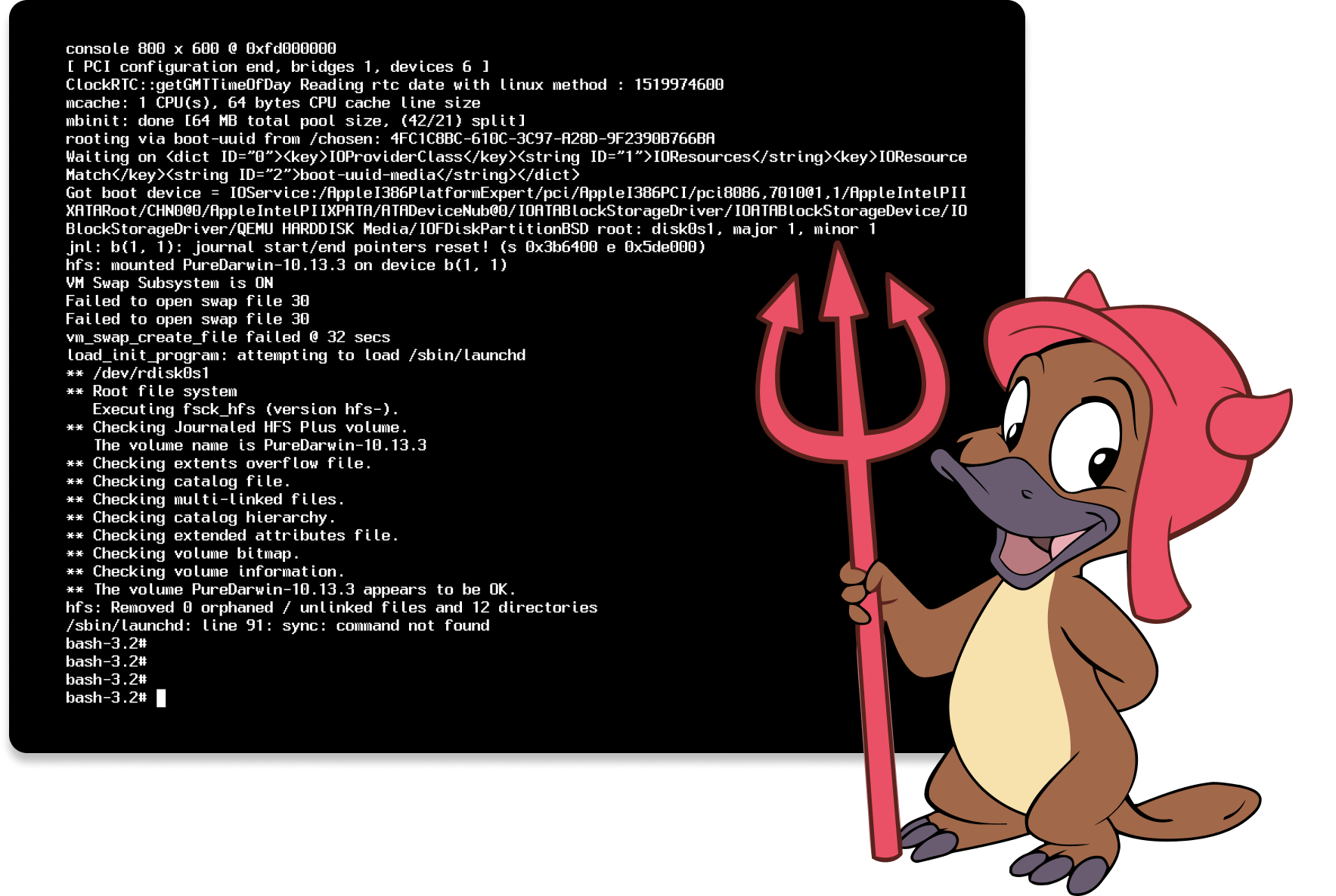
The PD-17.4 Test Build is a minimal system, unlike previous versions like PureDarwin Xmas with a graphical
interface. It’s distributed as a virtual machine disk (VMDK) and runs via software like QEMU.
Due to the lack of proprietary macOS components, the community must develop alternatives, leaving
elements like
network drivers and hardware support incomplete. This build is intended for developers and open-source
enthusiasts to explore Darwin development outside of macOS.
Based on Darwin 17, which corresponds to macOS High Sierra (10.13.x).
: If the wood's moisture content is higher than the standard nominal moisture level, the actual dimensions must be larger than the nominal ones by the established shrinkage value.
: For timber with mixed grain orientation (tangential-radial), shrinkage values are provided for final moisture contents ranging from 5% to 37% . Reference Tables
: Shrinkage values for thickness and width based on final moisture content. gost 67821 75
The standard applies to softwood lumber (coniferous wood) produced via tangential, radial, or mixed sawing methods. It establishes mandatory shrinkage allowances for thickness and width to compensate for volume loss during the drying process.
(officially Coniferous sawn timber. Shrinkage value ) is a Soviet-era state standard, still active in many CIS countries, that defines the shrinkage values for softwood lumber to ensure they meet nominal dimensions after drying. : If the wood's moisture content is higher
: Verification values for actual thickness and width at various moisture levels. Full Text Access
Because this is a technical legislative document, the full text—including the precise mathematical tables—is best viewed via official PDF repositories: : Rosstandart (Russian) Full Text (PDF) : Meganorm or Stroyinf Annotated Version : Docs.cntd.ru The standard applies to softwood lumber (coniferous wood)
The full document contains several critical lookup tables used by manufacturers: