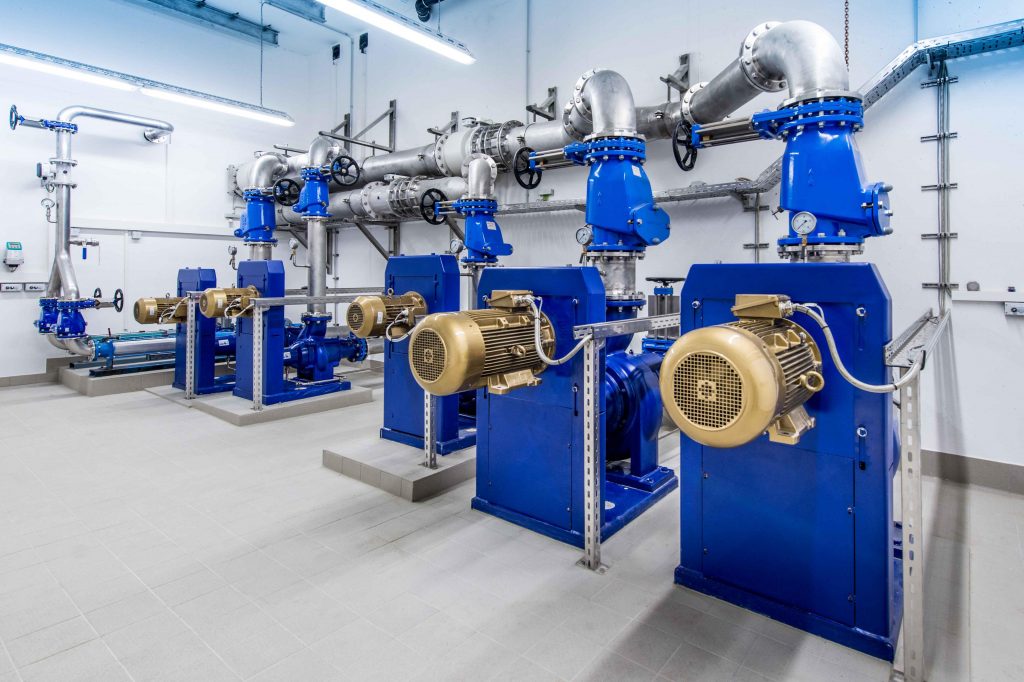
Reem Group is specialised in technical products division, that entirely focused on marketing the latest state-of-the-art equipment packages in water & waste water pumping systems, pressure vessels, solar systems, water tanks, switchgears and technical contracting (Total MEP Solutions).
Our Sales & Service teams are well experienced, and factory trained in the packaging of Water Transfer, Water Booster (with or without VFD), water pumps, water tanks, electrical water heaters, solar water heating system, water cooling systems, water treatment systems, control panel for all pumping solutions (variable frequency drive system) ,irrigation pumping systems with suitable filtration unit, chilled water pumps, pressurisation units, air separators, deaeration systems, pressure vessels etc and Electrical , Plumbing, Mechanical solutions . We deal with best brands in Water & Waste Water pumping system and Control panels.
LEARN MORE
Reem Group has offices in the UAE Oman and India with multicultural workforce.
UAE
OMAN
INDIA
There are three primary designs for beginner telescopes, each with distinct trade-offs:
Budget and portability are the final filters. High-quality beginner telescopes typically start between . Avoid "department store" telescopes under $100, which are often poor quality and can discourage new hobbyists. If your budget is tight, a pair of 10x50 binoculars is often a better investment, providing a wide field of view that makes learning the constellations easy. how to buy a telescope for beginners
How to pick the best beginner telescope | The Planetary Society There are three primary designs for beginner telescopes,
The is a highly recommended variation of the Alt-Az; it is a simple, floor-based wooden box that provides exceptional stability and ease of use at a low cost. While "GoTo" computerized mounts can automatically find objects, they are often expensive and can be frustrating for beginners to set up properly. Final Practical Considerations If your budget is tight, a pair of
Newtonians use mirrors to reflect light. They offer the best value, providing much larger apertures for the same price as smaller refractors. They require occasional "collimation," or alignment of the mirrors, but are superior for viewing faint galaxies and nebulae.
Selecting Your First Window to the Stars: A Guide for Beginners
The most critical specification for any telescope is its —the diameter of its primary lens or mirror. Unlike a camera zoom, a telescope acts as a "light funnel"; a larger aperture collects more light, allowing you to see fainter deep-sky objects and finer details on the Moon and planets. For beginners, an aperture of at least 4 to 6 inches (100mm to 150mm) is a recommended starting point for meaningful observations.