Literature

Dead-by-daylight Apr 2026

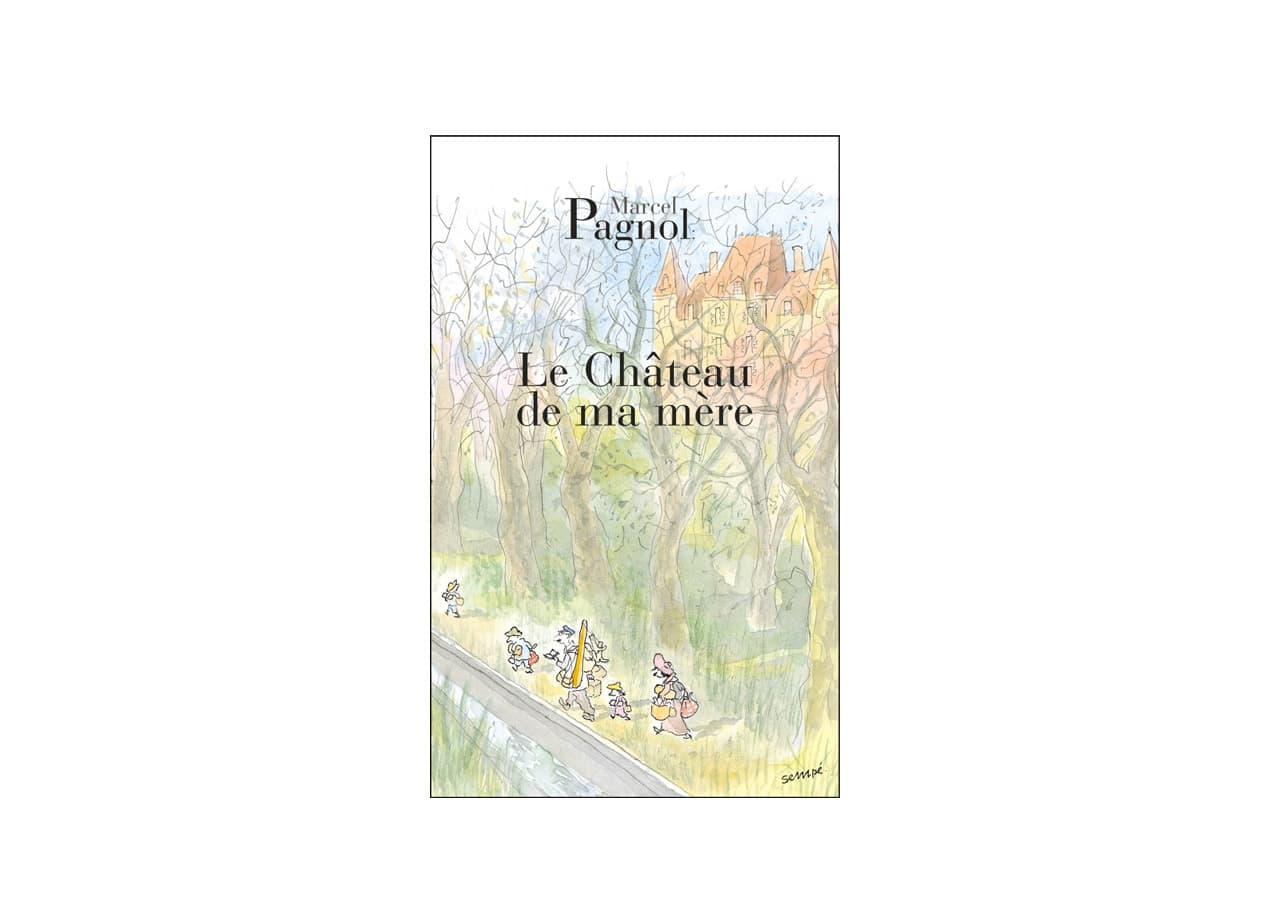
The most beautiful book on child friendship: one morning while hunting in the hills, Marcel meets the little peasant, Lili des Bellons. His vacations and his whole life will be illuminated by it.

The most beautiful book about childhood friendship.

Summary

One year after La Gloire de mon père (My Father’s Glory), Marcel Pagnol thought he would conclude his childhood memories with this Château de ma mère (1958), the second part of what he considered as a diptych, ending with the famous scene of the ferocious guardian frightening the timid Augustine. Little Marcel, after the family tenderness, discovered friendship with the wonderful Lili, undoubtedly the most endearing of his characters. The book closes with a melancholic epilogue, a poignant elegy to the time that has passed. In it, Pagnol strikes a chord of gravity to which he has rarely accustomed his readers.

Hey friend! “
I saw a boy about my age looking at me sternly. You shouldn’t touch other people’s traps,” he said. “A trap is sacred!
” 

– “I wasn’t going to take it,” I said. “I wanted to see the bird.” 

He approached: “it was a small peasant. He was, brown, with a fine Provencal face, black eyes and long girlish lashes.”

Buy online

You will also like:

Dead-by-daylight Apr 2026

The Persistence of the Fog: An Analysis of Dead by Daylight’s Asymmetrical Survival

The true genius of DBD lies in its role as the "Hall of Fame of Horror." By securing licenses for legendary franchises like Halloween, Resident Evil, and Silent Hill, developer Behaviour Interactive created a platform where Michael Myers can chase Leon S. Kennedy through the halls of Midwich Elementary. This crossover appeal provides a constant influx of new players, but the game’s deep lore—revealed through The Archives and character backstories—keeps them invested long after the novelty of the licenses wears off. The Entity itself serves as a meta-narrative tool, explaining why these disparate characters are trapped in an endless cycle of death and rebirth, effectively turning the gameplay loop into a canonical nightmare. dead-by-daylight

The and how it connects the different realms. The Persistence of the Fog: An Analysis of

Despite these growing pains and a notoriously vocal, often polarized community, Dead by Daylight persists because there is quite literally nothing else like it that offers the same depth. The introduction of modes like 2v8 and the consistent reworking of aging mechanics demonstrate a developer willing to iterate on a successful, if messy, formula. It is a game that thrives on the very thing it depicts: an endurance test. As long as players still feel the rush of a narrow escape or the satisfaction of a perfectly timed ambush, the Fog will continue to claim its victims. If you'd like to dive deeper, I can provide more detail on: The Entity itself serves as a meta-narrative tool,

However, the game is not without its systemic frictions. The asymmetrical nature of the 4v1 format creates an inherent "balance tightrope" that is nearly impossible to walk perfectly. Players often cite issues like "tunneling" (focusing on one survivor until they are eliminated) or "camping" as sources of immense frustration. As the game has shifted from its early days of "horror hide-and-seek" toward a more mechanically intensive "tag with horror characters," the community has become increasingly competitive. This shift has led to a perceived "sweatiness," where high-level matches often require rigid meta-builds to stand a chance, sometimes overshadowing the casual, scary atmosphere the game was originally known for.

In the decade since its 2016 release, Dead by Daylight (DBD) has evolved from a niche indie title into the definitive titan of the asymmetrical horror genre. While many competitors have risen and fallen—often hampered by balance issues or lack of content—DBD has maintained a vice-grip on its community by balancing a primitive "cat-and-mouse" gameplay loop with a sophisticated, ever-expanding multiverse of horror icons. To understand the longevity of Dead by Daylight is to understand the delicate tension between competitive frustration and the visceral thrill of the slasher fantasy.

A breakdown of the for both Killers and Survivors.
The Persistence of the Fog: An Analysis of Dead by Daylight’s Asymmetrical Survival

The true genius of DBD lies in its role as the "Hall of Fame of Horror." By securing licenses for legendary franchises like Halloween, Resident Evil, and Silent Hill, developer Behaviour Interactive created a platform where Michael Myers can chase Leon S. Kennedy through the halls of Midwich Elementary. This crossover appeal provides a constant influx of new players, but the game’s deep lore—revealed through The Archives and character backstories—keeps them invested long after the novelty of the licenses wears off. The Entity itself serves as a meta-narrative tool, explaining why these disparate characters are trapped in an endless cycle of death and rebirth, effectively turning the gameplay loop into a canonical nightmare.

The and how it connects the different realms.

Despite these growing pains and a notoriously vocal, often polarized community, Dead by Daylight persists because there is quite literally nothing else like it that offers the same depth. The introduction of modes like 2v8 and the consistent reworking of aging mechanics demonstrate a developer willing to iterate on a successful, if messy, formula. It is a game that thrives on the very thing it depicts: an endurance test. As long as players still feel the rush of a narrow escape or the satisfaction of a perfectly timed ambush, the Fog will continue to claim its victims. If you'd like to dive deeper, I can provide more detail on:

However, the game is not without its systemic frictions. The asymmetrical nature of the 4v1 format creates an inherent "balance tightrope" that is nearly impossible to walk perfectly. Players often cite issues like "tunneling" (focusing on one survivor until they are eliminated) or "camping" as sources of immense frustration. As the game has shifted from its early days of "horror hide-and-seek" toward a more mechanically intensive "tag with horror characters," the community has become increasingly competitive. This shift has led to a perceived "sweatiness," where high-level matches often require rigid meta-builds to stand a chance, sometimes overshadowing the casual, scary atmosphere the game was originally known for.

In the decade since its 2016 release, Dead by Daylight (DBD) has evolved from a niche indie title into the definitive titan of the asymmetrical horror genre. While many competitors have risen and fallen—often hampered by balance issues or lack of content—DBD has maintained a vice-grip on its community by balancing a primitive "cat-and-mouse" gameplay loop with a sophisticated, ever-expanding multiverse of horror icons. To understand the longevity of Dead by Daylight is to understand the delicate tension between competitive frustration and the visceral thrill of the slasher fantasy.

A breakdown of the for both Killers and Survivors.