
Bromus Secalinus [VERIFIED]

: B. secalinus has relatively short, straight, or slightly curved awns (usually 1–6 mm long), which helps distinguish it from similar species like downy brome which has much longer awns. Ecological & Historical Context rye brome (Bromus secalinus L.) - Invasive.org

: The plant features erect, unbranched stems with 4–8 alternate leaves. Leaf blades are roughly 9 inches long and covered with short hairs, while the sheaths are typically nearly hairless (unlike the very hairy Bromus tectorum ). bromus secalinus

: It produces an open, nodding panicle of spikelets that can be up to 7 inches long. As the grains mature, the panicle often droops to one side due to their weight. Leaf blades are roughly 9 inches long and

: The spikelets contain 5–15 flowers and produce large, linear-oblongoid grains that look superficially like rye, which is the origin of its scientific name ( secalinus meaning "rye-like"). : The spikelets contain 5–15 flowers and produce

, commonly known as rye brome , cheat , or chess , is an annual grass in the Poaceae family that typically grows between 1.5 to 3 feet (45–100 cm) tall. Native to Eurasia and parts of Africa, it has been introduced widely across North America and Australia, where it is often considered an aggressive agricultural weed in cereal crops like wheat and rye. Key Identification Features

Bromus Secalinus [VERIFIED]

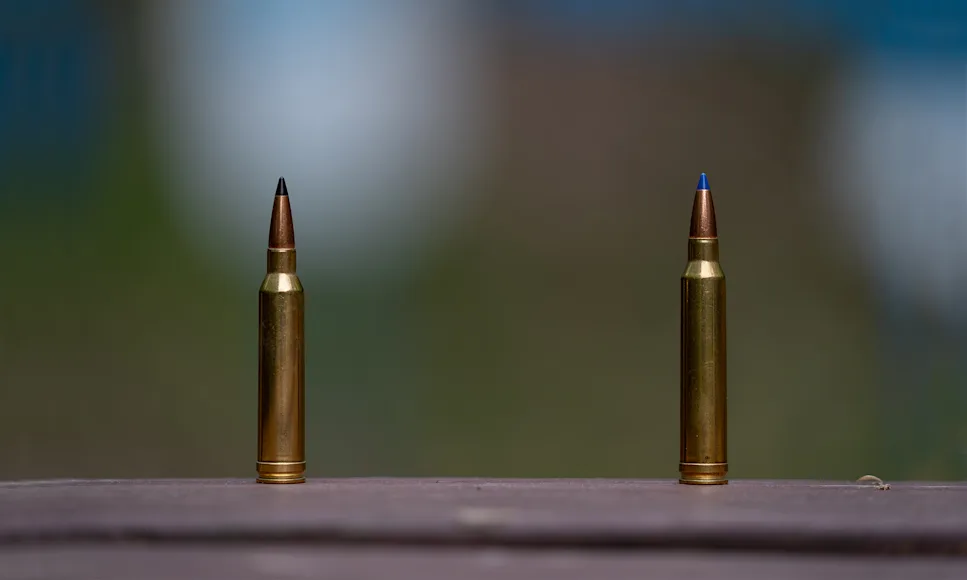
In a battle between two of the most popular big-game magnum cartridges of all time, which one comes out on top? Here’s the full breakdown
7mm Rem Mag vs 300 Win Mag loads resting on a board.
(Photo/Richard Mann)

7mm Rem Mag vs 300 Win Mag: Which Is Better?

: B. secalinus has relatively short, straight, or slightly curved awns (usually 1–6 mm long), which helps distinguish it from similar species like downy brome which has much longer awns. Ecological & Historical Context rye brome (Bromus secalinus L.) - Invasive.org

: The plant features erect, unbranched stems with 4–8 alternate leaves. Leaf blades are roughly 9 inches long and covered with short hairs, while the sheaths are typically nearly hairless (unlike the very hairy Bromus tectorum ).

: It produces an open, nodding panicle of spikelets that can be up to 7 inches long. As the grains mature, the panicle often droops to one side due to their weight.

: The spikelets contain 5–15 flowers and produce large, linear-oblongoid grains that look superficially like rye, which is the origin of its scientific name ( secalinus meaning "rye-like").

, commonly known as rye brome , cheat , or chess , is an annual grass in the Poaceae family that typically grows between 1.5 to 3 feet (45–100 cm) tall. Native to Eurasia and parts of Africa, it has been introduced widely across North America and Australia, where it is often considered an aggressive agricultural weed in cereal crops like wheat and rye. Key Identification Features